Batch Content Creation for Musicians: 2 Days a Month
Stop posting daily and burning out. Here's a batching system for musicians that fills a whole month of content in two filming days. Copy the framework.
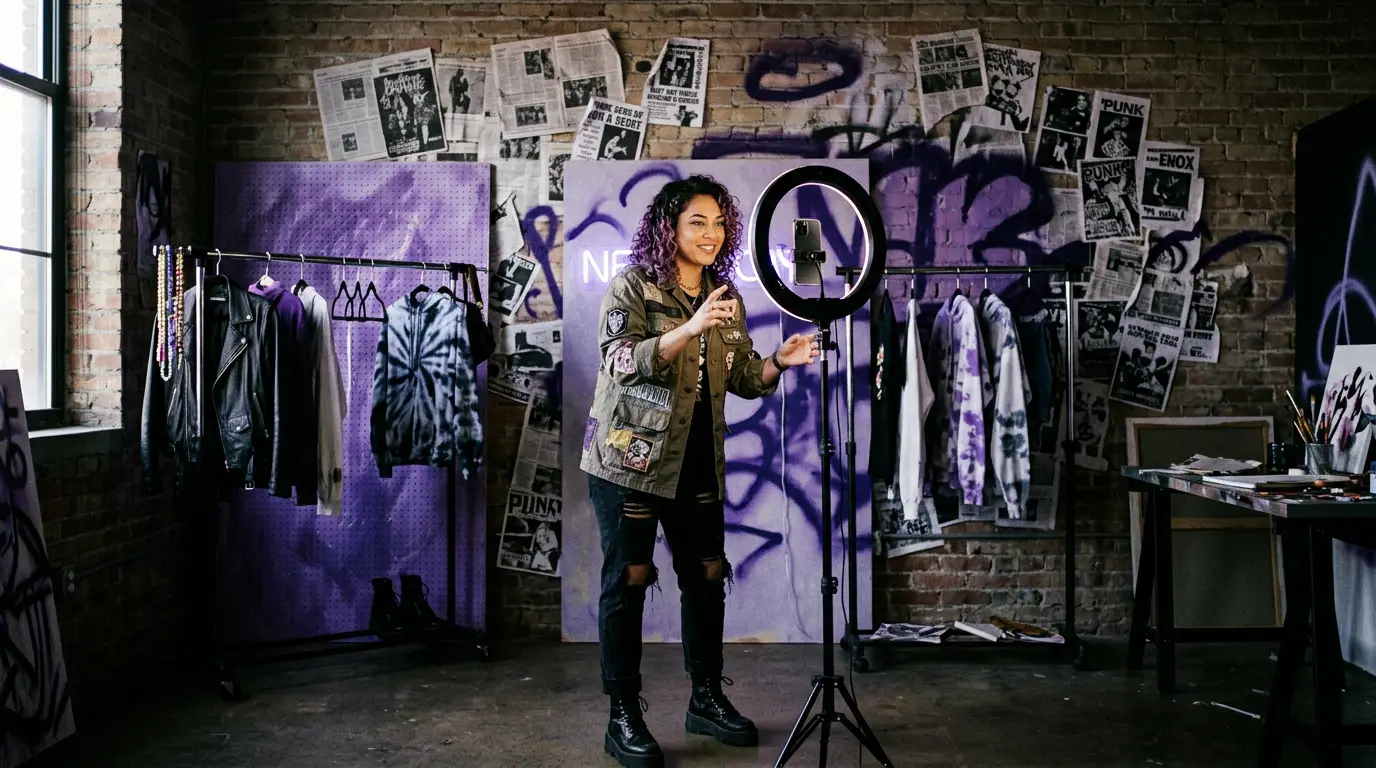
You know that feeling. It's 9pm, you got nothing filmed, and you're staring at your phone trying to force out a reel before you go to sleep. So you post something lazy. It flops. And now you're mad at yourself on top of being tired.
That's the daily-posting trap. It doesn't make you consistent. It makes you resentful. And resentful content looks like resentful content — the algorithm can smell it, and so can your fans.
Here's the truth almost nobody in the artist grind tells you: the people who post every day without losing their minds aren't filming every day. They filmed everything in a couple of sessions and they're just releasing it on a schedule. That's the whole game. That's batching.
Let me show you how to fill a full month of content in two filming days a month — and give you the exact system to plan it.
Why daily filming is killing your music
Every time you sit down to film, you pay a setup tax. Find the light. Fix the phone angle. Get in the headspace. Restart because a car drove by. Restart because you flubbed a line. That warm-up cost is the same whether you film one video or fifteen.
When you film daily, you pay that tax every single day. Twenty-plus times a month. That's where the burnout lives. It's not the posting — it's the constant context-switching between artist mode and content mode.
And here's the part that actually matters for your career: filming daily eats the time you're supposed to be making music. You didn't get into this to become a full-time videographer for your own phone. Batching gives you your studio time back.
Reports on creator burnout consistently point to the same thing — it's the relentless daily pressure, not the total workload, that breaks people. Compress the work into fewer days and the pressure drops off a cliff.
The core idea: separate the four jobs
Most artists try to do everything at once — plan, film, edit, and post in one exhausted motion at midnight. That's four different brains fighting for the same hour.
Batching works because you split content into four separate jobs and do each one in bulk:
- Plan — decide what you're making before you touch a camera
- Film — capture everything in dedicated sessions, same outfit or a couple of outfit changes
- Edit — cut it all in one focused block
- Schedule — load it into a queue and let it drip out
When you batch, you're never doing all four at once. On filming day you only film. On editing day you only edit. Your brain stays in one lane, and the work goes three times faster because you're not paying the setup tax over and over.
Two filming days a month is enough for most artists to stay visible every single day. Not because you're a machine — because you planned it.
THE 2-DAY BATCH BOARD (your fill-in system)
This is the thing. Steal it, copy it into your notes app, and never scramble at midnight again.
You're going to plan around four content buckets. Every video you make fits in one. Think of it like a balanced plate — you need all four or your account feels flat.
Bucket 1 — MUSIC: performance clips, snippets, studio moments, lyric moments. This is the product.
Bucket 2 — STORY: who you are, where you're from, why you make what you make, the wins and the struggles. This builds the fan, not the listener.
Bucket 3 — VALUE/PERSPECTIVE: your hot takes, your process, what you've learned, reactions to your scene. This is what makes strangers follow.
Bucket 4 — CONNECTION: replies to comments, behind-the-scenes, asking questions, jumping on a trend in your own voice. This is what turns followers into a community.
Now here's the fill-in board. Do this for one month at a time.
Step 1 — Set your number. Pick a realistic posting pace. Let's say you commit to 3 posts a week. That's 12 posts a month. Write that number down.
Step 2 — Divide by bucket. Assign your 12 across the four buckets. A solid default:
- Music: 4
- Story: 3
- Value: 3
- Connection: 2
Step 3 — Write the hook for each one. Not the whole script — just the first line. The scroll-stopper. Do all 12 hooks in one sitting. This is the planning job, and it's the most important one. A great hook filmed on a potato beats a boring video shot on a cinema camera.
Step 4 — Group by setup. Look at your 12 videos. Some need you at the mic. Some are talking-to-camera. Some are outside. Batch the ones that share a setup so you film them back-to-back. This is the secret to a fast filming day.
Step 5 — Two filming days. Split the 12 across two sessions in the month. Session one early, session two mid-month. Change your shirt once or twice per session so it doesn't look like you filmed it all in one hour (even though you did).
Step 6 — One editing block. Cut everything after each filming day. Or hand it off. Batch the edits the same way you batched the filming.
Step 7 — Load the queue. Drop them into a scheduler and set the dates. Now the month runs itself while you go make music.
That's the whole system. Twelve intentional posts, two filming days, one board. Fill it in and you've beaten the midnight scramble for good.
Filming day: how to actually move fast
A batching day falls apart when you show up unprepared and start improvising. Don't do that. Show up with your board filled in and treat it like a shift.
- Prep the space once. Light, angle, mic, backdrop. Set it and don't touch it.
- Film hooks first, in a run. Get all your opening lines down while your energy is high. The hooks are the hardest part and you want your best takes there.
- Do the batch you dread first. Talking-to-camera scares most artists. Knock it out early so it's not hanging over you.
- Don't chase perfect. Two takes, move on. You're filming twelve things, not one masterpiece. Raw and real beats polished and late every time.
- Capture extra B-roll. Hands on the keys, walking, the notebook, the coffee. Ten minutes of random b-roll saves you on editing day when a clip needs texture.
If you're an AI artist, batching is a straight-up superpower here. You can generate a run of visuals, covers, and video assets in a single planning block instead of one-off scrambling. Same principle — plan the batch, produce the batch, schedule the batch. The lane's different, the system's identical. Use the tools to fill your board faster than anybody working by hand.
Editing and scheduling without the black hole
Editing is where batching plans go to die. You sit down to cut one video and three hours vanish into re-watching your own face.
Set a timer per video. Give yourself a hard cap — say 20 minutes a clip — and when it dings, it's done. Done and posted beats perfect and buried.
Use a template. Same caption structure, same font, same intro style. When every video follows a format, editing turns into filling in blanks instead of inventing from scratch. That's the batching mindset applied to the edit.
Then load your queue. A free scheduler in the native apps works fine to start. The point isn't the tool — it's that the decision of when to post is already made. You never open the app at midnight asking "what do I post today." It's already there.
One more thing: leave a little room. Keep one or two slots open each week for something timely — a trend, a reply, a spur-of-the-moment moment. Batching gives you the base. The live stuff sprinkles on top. You don't have to choose one or the other.
The mindset shift that makes it stick
Here's what nobody warns you about. The first time you batch, it feels weird. You film twelve videos and then you go days without touching your camera and your gut says you're falling behind.
You're not. The content is already going out. That anxiety is just the old daily-grind conditioning talking. Ride it out for one month and you'll never go back.
Batching isn't about doing less. It's about doing the work when you're fresh instead of when you're fried. Same output, a fraction of the burnout, and your actual music finally gets the hours it deserves.
Two days a month. One board. That's the difference between an artist who quits in six months and one who's still standing in five years.
The Fill-Your-Month Hook Bank for Musicians
120 done-for-you scroll-stopping first lines, sorted by the 4 buckets — just pick, film, and post.
Ready to run this with help?
FAQ
How many videos should I actually batch in one session?
Start with what one month needs at your posting pace, then split it across two sessions. If you're posting 3x a week, that's 12 a month, or roughly 6 per filming day. If that feels like a lot, film fewer and post twice a week. The number matters less than the habit — build the muscle first, scale later.
Won't my content look repetitive if I film it all at once?
Only if you don't plan for it. Change your shirt once or twice per session, use a couple of different spots or angles, and vary your buckets so it's not twelve of the same talking-head clip. Filmed in one day, spaced out over a month — nobody watching can tell.
What if a trend pops up mid-month and my queue is full?
Leave one or two open slots each week for exactly this. Batching gives you a reliable base of content, but you keep room to jump on something timely. You're never locked in. The queue handles consistency; the open slots handle the live stuff.
I'm an AI artist — does this batching system still work for me?
Even better. Batching is built for anyone producing assets in runs, and AI lets you generate visuals, covers, and clips in a single planning block. Plan the batch, produce the batch, schedule the batch. The system is identical — you'll just fill your board faster.
What if I can't afford editing software or a scheduler?
You don't need either to start. The native editing tools in the apps and their built-in schedulers are enough to run this whole system. The board and the batching habit do the heavy lifting, not the gear.
Independent artist? Get your own feature.
Get Featured →
T-Pain Suing Akon Over Missing Royalties
T-Pain says Konvict Entertainment diverted his money to Akon's brother's label and never cut him a check.

Yoto's New Generation of Kids' Speakers Drops This Week
The British startup behind those colorful audio players your kids won't stop asking for just leveled up again.

IFPI Tells EU: Y'all Sleeping on AI Rules
The music industry's pushing back hard on regulators to actually enforce the protections artists and labels need.
Join the conversation