How Small Artists Actually Make Money Now
Streaming won't pay your rent under 1,000 monthly listeners. Here's where the money actually moved — and a revenue map you can build this week.
Let's kill a lie first. Nobody at your level is getting rich off Spotify. Not you, not the artist you're jealous of, not the one with the blue check.
I've reviewed over 15,000 independent artists live since 2021. I've seen the dashboards. Real ones. The number that lands in your account from streaming — for most artists under 100,000 monthly listeners — wouldn't cover a tank of gas some months. That's not doom talk. That's the floor you're building on. And once you accept it, you get free.
Because the money didn't disappear. It moved. And most small artists are still staring at the door it left through.
The Sub-1,000 Stream Wall Is Real — And It's Not Where the Money Is
Most platforms don't even pay out a track until it clears a stream threshold in a rolling window. Reports suggest the bar sits around 1,000 plays per track over 12 months before it earns a cent. Miss it, your money gets redistributed to the big fish.
So the game rewards artists who already have listeners. Cool. Rigged, but cool. Fighting that math head-on is how you go broke slow.
Here's what nobody tells you: streaming payouts were never supposed to be your income. They're a credibility number and a retargeting pool. That's it.
Think about it. A stream tells you someone pressed play. Once. Passively. Maybe from a playlist they didn't build. That's the lowest-commitment action a human can take toward your music. Why would the lowest-commitment action pay the most?
It doesn't. It never will. The money follows commitment.
Where the Money Actually Moved
Follow the effort. Every dollar in music now sits on a ladder, and the higher the commitment from the fan, the higher the payout to you.
Streaming = a fraction of a cent per play. Passive. Barely counts.
A follow or a save = intent. Doesn't pay directly, but it feeds your future releases and tells the algorithm you're worth pushing.
An email or a text = ownership. You can reach this person any time, free, no algorithm tax. This is the most slept-on asset small artists have.
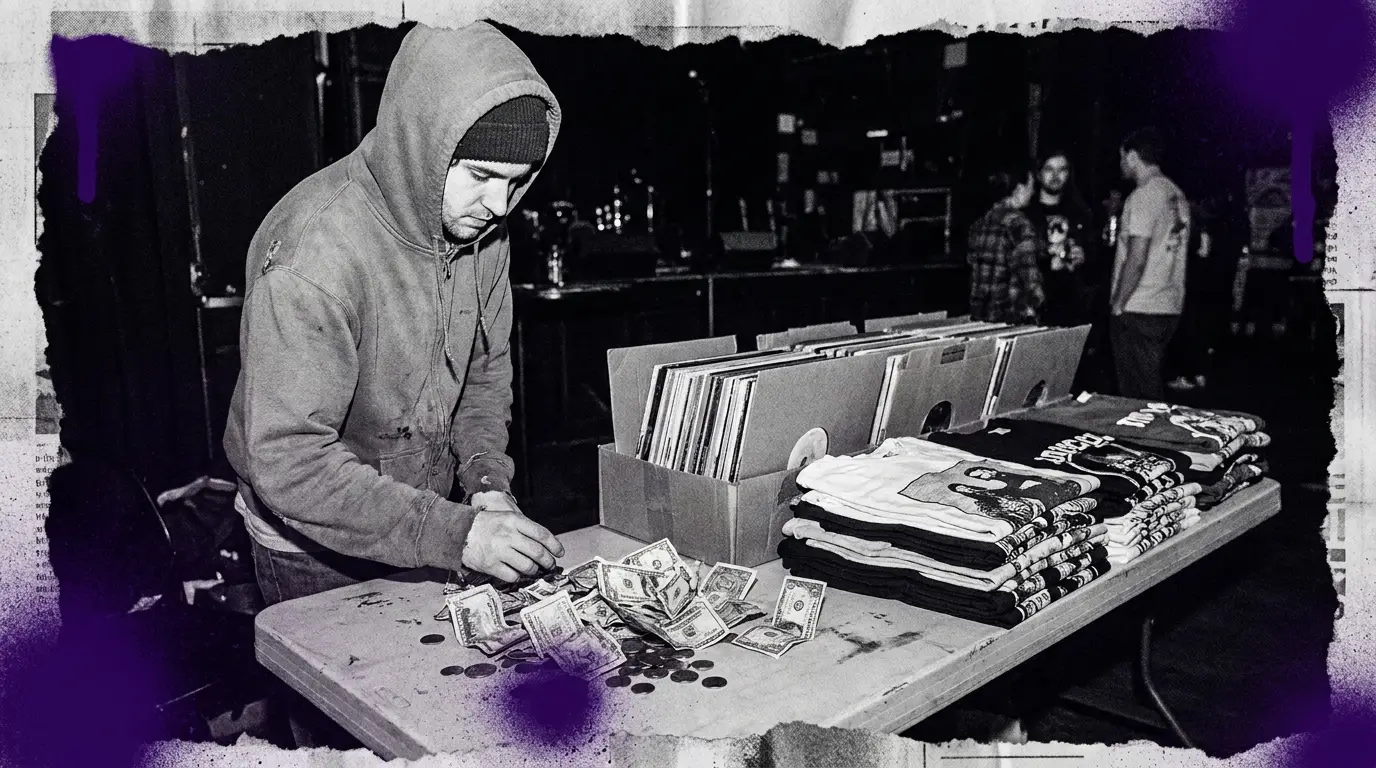
A merch buy = money in your pocket. A $25 shirt clears more than tens of thousands of streams. Let that sit.
A show ticket, a paid Discord, a vinyl, a beat license, a sync placement = the real bag.
So the question isn't "how do I get more streams." The question is "how do I move a passive listener one rung up the ladder." That's the whole business. That's it.
Let me hit the lanes that are actually paying small artists right now.
Merch — but smarter than a $30 tee
The old model was print 50 shirts, pray, eat the loss. Print-on-demand killed that risk. You upload a design, it prints when someone orders, you keep the margin. No inventory. No garage full of unsold hoodies.
The artists winning at merch aren't the best musicians. They're the ones with an identity fans want to wear. A phrase. A logo. An inside joke only your listeners get. Sell belonging, not cotton.
Sync licensing
This is the quiet money. TV, indie films, YouTube channels, ads, video games, podcasts — they all need music, and they pay for it. A single placement can pay more than a year of streaming.
You need clean, fully-owned tracks (you can't license something with an uncleared sample) and instrumental versions ready to go. Then you get them in front of music supervisors and licensing libraries. It's a slow build, but it stacks.
Direct fan support
Subscription platforms, tip jars, paid community tiers. A few hundred true fans paying you a small monthly amount beats a million passive streams. The math is embarrassing once you run it.
The catch: people pay for access and connection, not for "support me." Give them something. Early releases. Behind-the-scenes. A group chat where you actually show up.
Beats, samples, and creator tools
If you produce, you can sell licenses, sample packs, presets, and drum kits to other creators. This is one of the most reliable income floors in independent music because your customer is another artist who needs to make something tonight.
AI-assisted output as an actual advantage
If you're using AI tools to make music, art, covers, or video — good. You've got a speed and volume edge, and volume is fuel for everything on that ladder above. More releases, more content, more surface area to catch a fan.
The move is to point that speed at the paying rungs. Use AI to spin up merch designs, visualizers, short-form content, and alternate versions for sync fast. The artists treating AI as a factory for fan-facing assets — not just more tracks to bury in the streaming pile — are the ones turning it into money. Same ladder. You just climb it quicker.
Why Your Email List Beats Your Streaming Numbers
I need you to internalize one thing. You do not own your Spotify listeners. You do not own your Instagram followers. The platform does. They can change the algorithm tomorrow and your reach evaporates. Seen it happen to artists a hundred times.
You own your email list. You own your phone list. Nobody can throttle it. When you drop, everyone on that list hears about it — guaranteed, free, direct.
So every passive listener you can convert into an email is worth exponentially more than the stream itself. That's the conversion that funds everything else. Merch launches, presales, shows, crowdfunding — it all runs off the list.
Start it today. It doesn't need to be fancy. A free download, an unreleased track, a lyric zine — anything they trade an email for. Then you actually email them. Like a person. Not a spam bot.
The Revenue Stack: Your One-Page Money Map
Here's the payoff. This is the exact framework I walk artists through so they stop obsessing over streams and start building actual income. I call it the Revenue Stack — five layers, built bottom-up. You do NOT skip layers.
Fill this in for yourself right now:
Layer 1 — The Magnet (free thing that captures contact info) > My magnet is: ________________ > (unreleased track, sample pack, sticker, digital zine — pick one) > Fans trade their ____ (email / phone number) to get it.
Layer 2 — The Home (where you own the relationship) > My list lives on: ________________ (email platform or SMS tool) > I contact them every ____ (weekly / bi-weekly). Non-negotiable.
Layer 3 — The Small Yes ($5–$30 offer) > My entry product is: ________________ > (POD tee, digital download, single beat license, tip tier) > Margin per sale: $____
Layer 4 — The Big Yes ($50–$300 offer) > My premium offer is: ________________ > (vinyl, bundle, show ticket, exclusive license, 1-on-1) > This is what a true fan buys.
Layer 5 — The Recurring (money that repeats monthly) > My recurring layer is: ________________ > (paid community, subscription tier, sync catalog placements) > Target: ____ paying members.
Rule of the stack: streaming and social sit UNDER Layer 1. They're the crowd. Their only job is to feed the Magnet. That's the whole reframe. Streams aren't the income — they're the top of the funnel, and the funnel points at these five layers.
Build one layer at a time. Most artists try to build Layer 5 with no Layer 1 and wonder why nobody's paying. You can't have superfans if you never captured the fans.
What To Do This Week
Don't try to build all five at once. You'll freeze. Do this:
1. Pick your Magnet. One free thing. Set it up so people trade an email for it. 2. Start the list. Free tier of any email tool works. Zero excuses. 3. Launch ONE small-yes product. Print-on-demand tee or a beat/sample pack you can make this week. 4. Point every stream and post at Layer 1. Every caption, every bio link — send them to the Magnet, not just "stream my song." 5. Email your list once. Say hi. Be human. That's the muscle you're building.
That's a functioning business. Small, but real. And real beats viral-but-broke every single time.
The artists who make it aren't the most talented. I've watched 15,000+ of them. The ones who eat are the ones who understood the money moved off the stream and onto the ladder — and built the ladder.
Go build yours.
The Fan Ladder Calculator
Plug in your listener count and see exactly how much money each rung is leaving on the table.
Ready to run this with help?
FAQ
How many streams do I need to make real money?
Wrong question. Reports suggest most platforms don't even pay a track until it clears around 1,000 plays a year, and even then it's fractions of a cent per stream. You'd need hundreds of thousands of monthly listeners for streaming alone to matter. Instead, use streams to feed your email list and sell merch, licenses, and direct fan offers — that's where the actual dollars are.
Isn't merch a waste of money if I have to buy inventory upfront?
That's the old model. Print-on-demand means the product only prints when someone orders it, so you carry zero inventory and eat zero loss. You keep the margin on each sale. It's the lowest-risk way to add income, and one shirt can out-earn tens of thousands of streams.
I use AI to make my music. Can I still do sync licensing and sell it?
Yes. The key is clean ownership — you can license and sell music you fully own, and AI tools give you a real speed and volume edge for producing tracks, alternate versions, and instrumentals that sync buyers want. Keep your files organized and your rights clear, and point that speed at the paying rungs of the ladder.
What's the single most important thing to build first?
An email or text list, fed by a free 'Magnet' that people trade their contact info for. You don't own your streaming listeners or social followers — the platform does. You own your list. It funds every launch, presale, and drop you'll ever do.
How often should I actually email my list?
Consistently — weekly or bi-weekly beats sporadic. And write like a person, not a marketing bot. The list only works if you show up and give value between the moments you're selling something.
Independent artist? Get your own feature.
Get Featured →
T-Pain Suing Akon Over Missing Royalties
T-Pain says Konvict Entertainment diverted his money to Akon's brother's label and never cut him a check.

Yoto's New Generation of Kids' Speakers Drops This Week
The British startup behind those colorful audio players your kids won't stop asking for just leveled up again.

IFPI Tells EU: Y'all Sleeping on AI Rules
The music industry's pushing back hard on regulators to actually enforce the protections artists and labels need.
Join the conversation