How Do Independent Musicians Make Money? The Revenue Stack
Full-time indie artists don't get rich off one income source. Here's the 6-pillar revenue stack that actually pays the bills — plus a template to build yours.
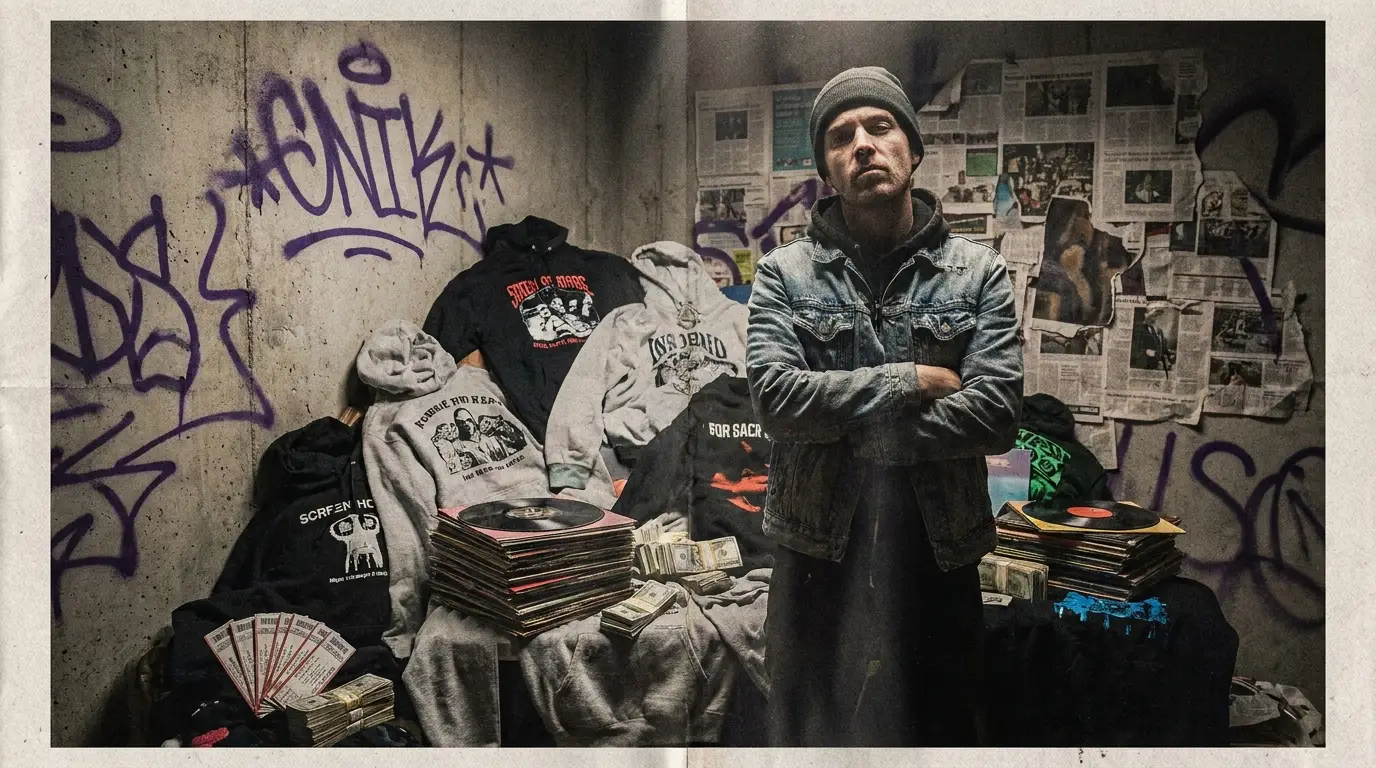
The lie you got sold about "making it"
Most broke artists are broke because they're waiting on one big win. One viral moment. One placement. One check that changes everything.
That's not how full-time indie money works. I've reviewed 15,000+ independent artists live since 2021, and the ones actually paying rent off music? They don't have one income source. They have six small ones stacked on top of each other.
Nobody's living off streaming alone. Reports suggest most streaming platforms pay a fraction of a cent per stream, which means you'd need millions of plays a month just to clear minimum wage. That math doesn't work. So the pros stopped trying to make it work.
Instead they built a stack. Little rivers instead of one river you're praying floods. Let me show you what the stack actually looks like — with realistic ranges, not fantasy numbers — and then I'll hand you the template to build your own.
Pillar 1: Recorded music (streaming + downloads)
This is the pillar everybody obsesses over and it's usually the smallest.
Streaming pays, but it pays slow and it pays thin. Reports suggest it takes hundreds of thousands of streams to see meaningful money. For most independent artists starting out, this pillar is a trickle — think coffee money, not rent money — until your catalog grows.
Here's the mindset shift: streaming isn't your income, it's your discovery engine. It's the top of the funnel that feeds every other pillar. People find you on a playlist, then they buy a shirt, book you, or follow you off-platform. That's the real value.
Don't sleep on direct downloads either. Bandcamp-style platforms let fans pay you directly, and superfans will pay way more than a stream is worth. A download buyer might be worth 100x a casual streamer.
Realistic range: anywhere from pocket change to a few hundred a month for most working indies, scaling with catalog size and release consistency.
Pillar 2: Live shows and performance
For a lot of full-time artists, this is the engine room.
Live money is real money. You get paid a guaranteed fee, or a door split, or both. And nobody's taking 30% before you see it the way a platform does. You show up, you perform, you get paid same night in a lot of cases.
This pillar scales with your reputation and your region. A local opener might pull a small flat fee. A regional headliner with a real draw can command real numbers per night. Add festivals, private events, corporate gigs, and weddings, and this pillar alone can carry an artist.
If you're an AI artist or you produce more than you perform — don't skip this. Live doesn't only mean you on a stage with a mic. DJ sets, curated listening events, sync-to-visual live shows, and hosting your own experiences all count. The point is: get in a room with people who paid to be there.
Realistic range: hugely variable — from a small door split to four figures a night for artists with a proven draw.
Pillar 3: Merch and physical products
Merch is where you turn attention into ownership.
A fan who streams you owes you nothing. A fan wearing your shirt is a walking billboard who already paid you. The margins on merch beat streaming badly — you keep a real chunk of every sale after production.
Start simple. Tees, hoodies, hats. Then get creative: vinyl, cassettes (yes, still), signed prints, art cards, limited drops. AI artists have a real edge here — you can generate stunning visual worlds around your music and turn those into physical collectibles, cover art prints, and design-forward apparel that stands out on a table.
The trick is scarcity and story. Limited runs. Numbered pieces. "Only made 50." People don't just buy the shirt, they buy the moment.
Realistic range: depends entirely on audience size and how often you drop — but merch margins are strong enough that even a small loyal base can produce steady monthly income.
Pillar 4: Sync, licensing, and placements
This is the quiet pillar that pays the most per unit.
Sync is when your music gets placed in something — a show, an ad, a game, a YouTube video, a TikTok campaign, a podcast, a short film. One placement can pay more than a year of streaming. And it comes with backend royalties on top.
The game here is availability and metadata. Your songs need to be registered, tagged, and easy to license. Instrumentals and clean versions get placed more, so make them. Music libraries, sync agencies, and direct pitching to music supervisors are all lanes.
AI artists and producers, listen close: sync is arguably the friendliest pillar for you. The content world is starving for fresh, cleared, ready-to-use music at volume. If you can produce a deep, well-organized catalog with clear rights, you're built for this lane.
Realistic range: unpredictable but high-ceiling. Placements can range from modest fees to major checks depending on the usage and the buyer.
Pillar 5: Fan funding and memberships
The most stable pillar most artists never turn on.
This is recurring money from your realest fans. Monthly memberships, subscriber tiers, tip jars, pay-what-you-want drops, exclusive content, community access. It's the difference between hoping for sales and knowing what's coming in every month.
Here's why it beats everything for stability: it's predictable. Fifty people paying you a small monthly amount is more reliable than any viral spike. It doesn't care about the algorithm. It doesn't care about a bad month.
Give your members something real — early releases, behind-the-scenes, voting on decisions, unreleased tracks, a private community. People don't pay for content, they pay to belong to something.
Realistic range: starts small and compounds. The number that matters isn't dollars per fan, it's how many fans and how consistent.
Pillar 6: Teaching, services, and IP
The pillar built on your skills, not just your songs.
You know how to do things other people want to learn or want done. Production. Mixing. Songwriting. Prompt-crafting for AI music. Beat-making. Vocal coaching. Branding. That's income.
Beats and sample packs, custom production for other artists, mixing services, one-on-one coaching, courses, presets, templates — all of it turns your expertise into cash while you sleep or between releases. AI artists can sell workflows, custom voice/style development, and packaged systems that took you months to figure out.
This pillar smooths out the lumpy months. When a release cycle is quiet, your services keep the lights on.
Realistic range: flexible and fast — often the quickest pillar to activate because you can start today with skills you already have.
The 6-Pillar Revenue Stack Template
Here's the payoff. Copy this, fill it in, and you'll instantly see where your money actually comes from — and the one pillar that could double your income if you turned it on.
Write these six lines. Next to each, put your current monthly income (even if it's $0) and your realistic 6-month target:
1. Recorded Music — streaming + direct downloads → _current $___ / target $___ 2. Live Performance — shows, sets, events → _current $___ / target $___ 3. Merch — apparel, physical, collectibles → _current $___ / target $___ 4. Sync & Licensing — placements, libraries → _current $___ / target $___ 5. Fan Funding — memberships, tips, subscriptions → _current $___ / target $___ 6. Skills & IP — beats, services, teaching → _current $___ / target $___
Now the diagnosis. Count your pillars that are above zero.
- 0–1 pillars active: you're not an artist business yet, you're a hobby with a dream. Turn on one more pillar this month. Easiest to activate fast: Merch, Fan Funding, or Skills.
- 2–3 pillars active: you're building. Find your weakest producer and either fix it or replace it. Don't add a fourth until your top three are consistent.
- 4–6 pillars active: you're running a real operation. Now optimize — pour more into whichever pillar returns the most per hour of your time.
The rule that changes everything: never let one pillar be more than half your income. The second any single source dominates, you're fragile. One algorithm change, one lost gig, one platform decision and you're done. Diversify on purpose.
Do this exercise once a quarter. Watch the stack grow. That's what full-time actually looks like — not one big check, six steady ones.
The order you should build them in
Don't try to light all six at once. You'll burn out and do all of them badly.
Start with what's fastest to cash: Skills, Merch, and Fan Funding can all activate in weeks with a small audience. Then layer in Live as your reputation grows. Sync rewards a deep catalog, so it compounds over time — start feeding it early even if it pays late. And Recorded Music keeps running in the background as your discovery engine, feeding everyone else.
Stack in that order and you build a business, not a lottery ticket.
The Revenue Stack Calculator
Plug in your numbers and see exactly which of the 6 pillars will pay your rent first.
Ready to run this with help?
FAQ
How many streams do I need to make a living?
More than you think and probably more than you'll get from streaming alone. Reports suggest streaming pays a fraction of a cent per play, so you'd need millions of monthly streams to clear a real income from that pillar by itself. That's exactly why the stack exists — treat streaming as your discovery engine, not your paycheck, and make your money off the other five pillars it feeds.
Can AI artists actually make money with this stack?
Yes, and some pillars favor you. Sync and licensing love a deep, well-organized, cleared catalog — which AI producers can build at volume. Merch and IP are wide open because you can generate strong visual worlds and sellable systems. The stack works the same: build multiple rivers, don't rely on one.
Which pillar should I start with if I'm broke right now?
The fastest-to-cash ones: your skills, merch, and fan funding. You can sell a beat, a service, a shirt, or a membership tier this week with the audience you already have. Live and sync take longer to ramp, so plant those seeds but lean on the quick pillars first.
How much money can I realistically make as an indie artist?
Depends entirely on how many pillars you turn on and how consistent you are. The honest answer: there's no single number. But artists paying rent off music almost never do it from one source. They stack small, steady incomes until the total covers their life.
Independent artist? Get your own feature.
Get Featured →
T-Pain Suing Akon Over Missing Royalties
T-Pain says Konvict Entertainment diverted his money to Akon's brother's label and never cut him a check.

Yoto's New Generation of Kids' Speakers Drops This Week
The British startup behind those colorful audio players your kids won't stop asking for just leveled up again.

IFPI Tells EU: Y'all Sleeping on AI Rules
The music industry's pushing back hard on regulators to actually enforce the protections artists and labels need.
Join the conversation