This Could Get Bad Turned a PhD Dissertation Into 23 Songs About How Prevent the End of the World As We Know It
a metalcore album built from a doctoral thesis on alien disclosure — no, really
The kid who quit wrestling and picked up a knockoff Strat
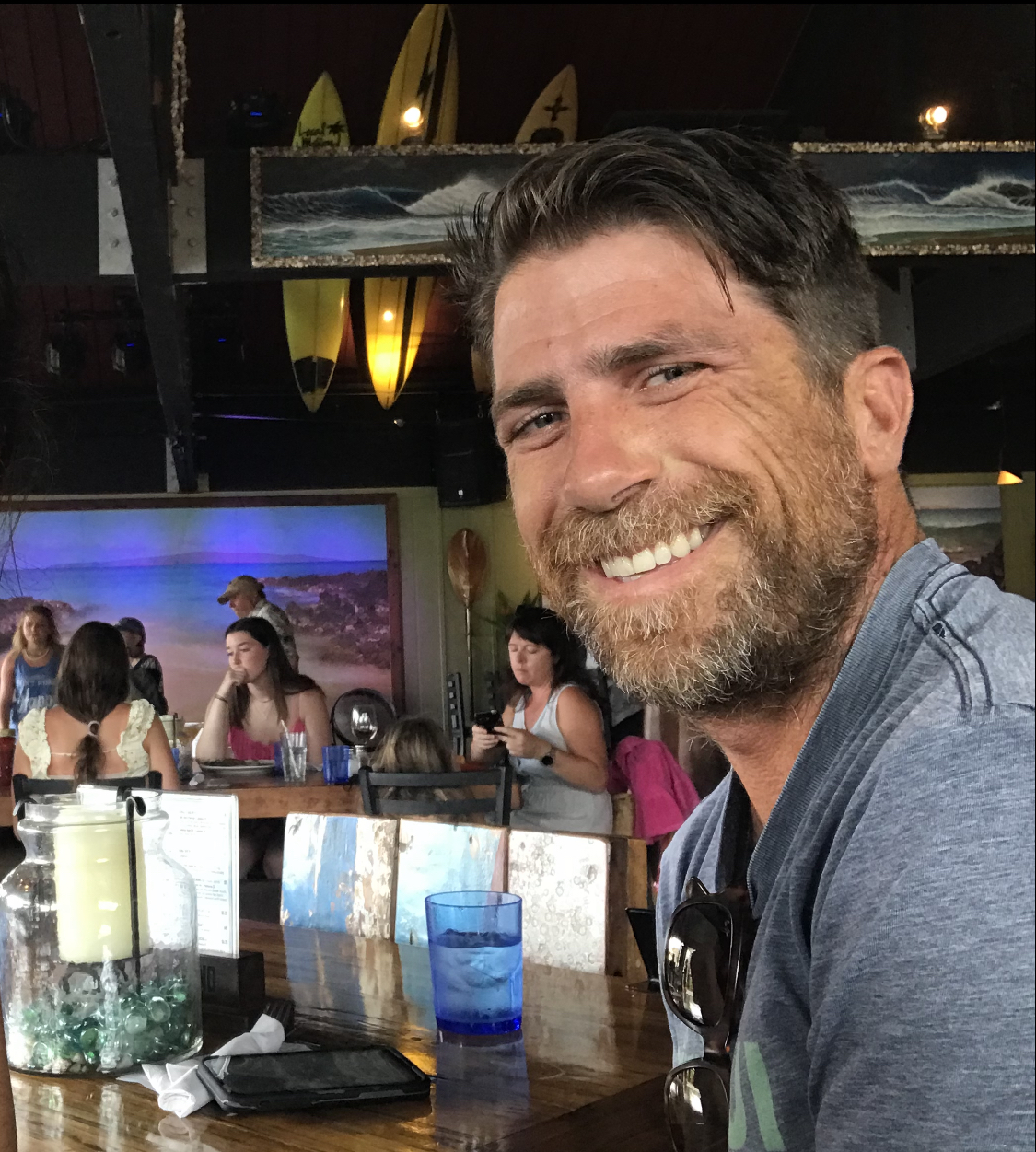
He wrestled his freshman year of high school. Quit the day a new girl beat him. Then he told some kids he could play drums and guitar — which wasn't exactly true yet. So he bought a Fender Strat knockoff off a friend sold him for a hundred bucks and made it true.
That's Matty, the multi-instrumentalist behind This Could Get Bad. He inherited his dad's acoustic at 7 but didn't touch it seriously until 15. Then it clicked. Drums became his passion, but he got good on bass and guitar too — all by ear, wearing out Bush, NOFX, Face To Face, and Pennywise until he could reverse-engineer the parts.
His band, “Furious Nick” was fast and heavy. They played the Chicago suburbs alongside local acts, some of whom went on to real careers — Fall Out Boy, Plain White T's, The Academy Is, Much The Same, Counterpunch, Wax On Radio. They self-recorded over 100 songs onto a Tascam 4-track in a couple of years.
Then life took the wheel. He joined the Air Force in 2003. Seven years later he got out, went to the Illinois Institute of Art-Schaumburg for a bachelor's in Audio Production and Engineering, ran a modest home studio, did live sound — including some work with Gary Sinise and the Lt. Dan Band — then sold most of his gear to move to Hawaii.
15 years silent, then a thesis became an album
Here's the part most people would've never come back from. Matty went over ten years without writing or recording anything seriously. He had all the instruments. What he didn't have was the belief or inspiration. His writing didn't fit verse-chorus-verse, so he never called himself a real songwriter.
What unlocked it was Propagandhi — a band that writes songs more like essays than pop structures, telling dense narratives without repeating themselves. That's how Matty's brain works. So he stopped fighting it and leaned in.
And he had a rubric most artists don't: his own PhD dissertation.
The Disclosure Cycle is a 23-song album pulled directly from that dissertation, mapping how UFO/UAP/alien disclosure would ripple through every part of life — psyche, society, religion, government — and how we'd navigate it. The lyrics aren't vibes. They're a blueprint set to punk and metalcore.
The hard part wasn't the writing. It was the silence around it. His friends and family met the project with mostly ambivalence — no real interest, no support. He wasn't making it for them; he was making it because he had to finish it. But he says it straight: it's disheartening to pour yourself into something you're proud of and watch the people closest to you not care.
He finished it anyway. That's the whole story right there.
What he actually wants you to walk away with
Ask him what he wants new fans to feel about him and he stalls. Because that's not the point.
"Knowing or feeling something about me is not as important as what I hope my lyrics convey," he says. The goal is to help people build mental room for fringe and taboo ideas — to think about the impossible-yesterday, real-tomorrow stuff pragmatically instead of panicking. But he's clear that you can't force belief on anyone. Push it as dogma and it means nothing. Let people choose it themselves and it becomes genuine.
That's a rare thing to hear from someone this convinced of their subject. He's not preaching. He's making space.
What's next
He's not slowing down. Two more complete albums are done, both branching off The Disclosure Cycle theme. And the whole thing feeds his podcast, also called This Could Get Bad, where he'll break down his lyrics and dissertation material while interviewing as many people as he can — the slow, healthy way to normalize the conversation.
Whether or not you buy the premise, respect the work: a decade of doubt, a dissertation, and a genre most people abandon after 30, all pointed at the same target on purpose.
Find This Could Get Bad on Spotify, catch The Disclosure Cycle on YouTube, and follow the podcast @thiscouldgetbadpodcast on YouTube.
Independent artist? Get your own feature.
Get Featured →
BLUES NM Is Building Soundtracks for the Long Haul
underground and self-taught since 2017 — this is the artist making music to grow with

Alma Libre and the Two Words That Changed Everything: "Still Here"
"Without me, you are nothing." She made a whole song proving them wrong.

Nathan Roughton Lets the Music Do the Talking
dude survived a drunk driver in December and came out writing harder — real ones only
Join the conversation